Tuesday, November 3, 2015

What’s Happening in Your Brain and Body as You Listen to Music Melissa Bykofsky November 3, 2015

https://www.yahoo.com/health/what-s-happening-in-your-1291460065820726.html

You wake up to a song as your alarm clock, stream music while you crunch numbers at work, blast power workout playlists at the gym, and attend music festivals on the weekend. But did you know that what you’re listening to can actually affect how you act, feel, and think?
“The effect of music on the brain or body depends in part on its genre,” Frank A. Russo, PhD, associate professor of psychology at Ryerson University, tells Yahoo Health. But it also depends on whether or not you like the song. “Someone who is a ‘metalhead’ will be able to hear all sorts of emotions in music that others would generally hear as being aggressive,” he says.
Regardless of your taste in music, here are some things that happen in your brain and body every time you push play on Spotify.
Your mood improves. Listening to “Happy” by Pharrell Williams can actually cheer you up. Research published in the Journal of Positive Psychology shows that listening to upbeat music improves mood, with one catch — it only works if you have the desire to be happy. Test subjects who listened to the upbeat music without feeling an urge to be happy did not see their moods change. “Listening to positive music may be an effective way to improve happiness, particularly when it is combined with an intention to become happier,” the study says. A separate study also showed that the “feel-good” neurochemical called dopamine is releasedwhen we listen to music. 
You work better. A 1993 study on “the Mozart effect” showed that listening to Mozart could improve standardized test scores. However, it’s not just classical music that has this effect. A study published in the journal Intelligence shows that people exposed to music performed better at spatial tasks than those not listening to music, but this was not dependent on the musical genre. One of the researchers in the Mozart effect study, Frances Rauscher, explained the implications to NPR: “The key to it is that you have to enjoy the music. If you hate Mozart, you’re not going to find a Mozart effect. If you love Pearl Jam, you’re going to find a Pearl Jam effect.” 
You recall certain memories. Ever listen to a song and get vivid flashbacks? “Music can definitely support the recall and even formation of memories,” Russo says. “Enjoyable music may lead to dopamine release in the mesolimbic [reward] pathway, which may in turn support the formation of associations and, ultimately, memories.” A studypublished in the journal Neuropsychologia shows playing music helps improve working memory as well. “Behaviorally, musicians outperformed nonmusicians on standardized subtests of visual, phonological, and executive memory,” according to the study. 
Your skin crawls — in a good way. When a song goes in a direction you just didn’t expect (with a key change or diversion in melody, for example), you may experience physical sensations on your skin. Wesleyan psychologist Psyche Loui calls them “skin orgasms,” Science of Us reports
You can exercise harder and longer. Do you listen to music when you run? Then you know how effective it is at pushing you through that final mile. “Music has been shown to help us work harder and longer by increasing physical capacity and arousal and improving performance,” Jeanette Bicknell, PhD, tells Yahoo Health. Bicknell points to a study in the International Review of Sport and Exercise Psychology that found that carefully selected music, like a workout playlist, can have performance-enhancing benefits during high-intensity exercise. Experts believe that music with a tempo of 180 beats per minute is best for running.
You experience changes in blood pressure. Depending on the music you listen to, your blood pressure can rise or fall when you jam out. Research presented at the British Cardiovascular Society showed that listening to music from Beethoven, Puccini, and Verdi was associated with a decrease in blood pressure and a lower heart rate — regardless of whether the person actually preferred that kind of music. Meanwhile, rock and pop either didn’t have an effect on blood pressure or seemed to increase it. Similarly, a small study published in the journalHeart showed that listening to fast music was associated with increased blood pressure, while listening to slower music was associated with — you guessed it — decreased blood pressure.

Monday, August 10, 2015

7 Amazing Things that Happen to Your Body When You Give Up Soda

https://www.yahoo.com/health/7-amazing-things-that-happen-to-your-body-when-you-126344262978.html

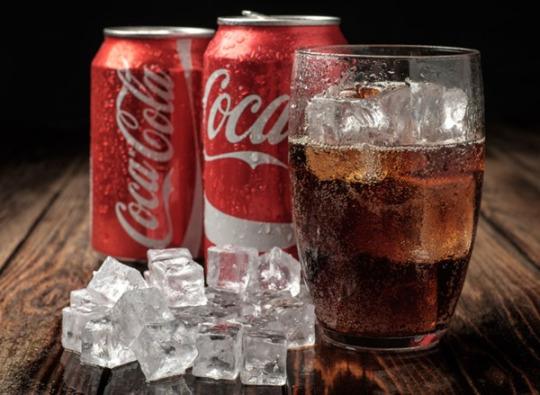
The Coca-Cola company has identified the culprit behind America’s weight problem. And it wants to put the blame on….you.

See, you don’t exercise enough — that’s what Coke wants you to believe. The world’s largest producer of soda is pouring money into a nonprofit organization called the Global Energy Balance Network, a research group with the mission of proving that our diets have little to do with our obesity crisis.
The group’s vice president, Steven N. Blair, PED, an exercise scientist, claims that “there’s really virtually no compelling evidence” that eating fatty foods and drinking sugary beverages causes weight gain. Instead, the fact that 2 out of 3 Americans is overweight or obese is just proof that we’re not working hard enough in the gym, he says.
If that sounds like a desperation move to you, it is: The amount of full-calorie sodas drunk by the average American has dropped 25 percent since the late 1990s, according to areport last month in the New York Times. And while Coke isn’t about to go broke any time soon — it owns everything from Dasani water to Odwalla juice — reversing the decline of its premier brand is clearly a priority. Even if that means pointing a finger at you.
But don’t be fooled. Giving up soda may be the single best thing you can do for your weight, and your health. The editors of Eat This, Not That! took a close look at the research and discovered these 7 amazing things that happen when you give up soda. (Including Diet. Click here to discover more on The Shocking Truth About Zero-Calorie Foods!)

7 Amazing Things that Happen to Your Body When You Give Up Soda

7 Amazing Things that Happen to Your Body When You Give Up Soda
(Photo: Fotoatelie / Shutterstock.com)
The Coca-Cola company has identified the culprit behind America’s weight problem. And it wants to put the blame on….you.

See, you don’t exercise enough — that’s what Coke wants you to believe. The world’s largest producer of soda is pouring money into a nonprofit organization called the Global Energy Balance Network, a research group with the mission of proving that our diets have little to do with our obesity crisis.
The group’s vice president, Steven N. Blair, PED, an exercise scientist, claims that “there’s really virtually no compelling evidence” that eating fatty foods and drinking sugary beverages causes weight gain. Instead, the fact that 2 out of 3 Americans is overweight or obese is just proof that we’re not working hard enough in the gym, he says.
If that sounds like a desperation move to you, it is: The amount of full-calorie sodas drunk by the average American has dropped 25 percent since the late 1990s, according to areport last month in the New York Times. And while Coke isn’t about to go broke any time soon — it owns everything from Dasani water to Odwalla juice — reversing the decline of its premier brand is clearly a priority. Even if that means pointing a finger at you.
But don’t be fooled. Giving up soda may be the single best thing you can do for your weight, and your health. The editors of Eat This, Not That! took a close look at the research and discovered these 7 amazing things that happen when you give up soda. (Including Diet. Click here to discover more on The Shocking Truth About Zero-Calorie Foods!)
1) YOU’LL BE LESS HUNGRY
Despite what Coke says, their flagship product, made with High Fructose Corn Syrup, will cause weight gain—one can has the calorie equivalent of a pack of Sour Patch Kids, but with 10 more grams of sugar! Diet soda packs on the pounds as well—it’s just more passive-aggressive about it. It also makes you crave more sweets. “Artificial sweeteners affect our sense of satiety,” says Isabel Smith, MS RD CDN, of Isabel Smith Nutrition. “Our bodies have evolutionarily developed to expect a large amount of calories when we take in something exceedingly sweet, and those artificial sweeteners are from 400 times to 8,000 times sweeter than sugar.” That causes a couple things to happen, says Smith. “The muscles in your stomach relax so you can take in food, and hormones are released. With artificial sweeteners, your body says, ‘Wait a minute, you told me you were going to give me all this high-calorie food.’ It can actually send some people searching for more food, out of lack of satisfaction.”

Drink This, Not That! Tip: To satisfy your sweet tooth, try the new fruit that tastes like chocolate pudding, one of our 8 New, Secret Superfoods for Weight Loss!
2) YOU’LL LOOK YOUNGER
Americans spend millions of dollars on anti-aging products, multi-vitamins, and personal trainers to keep themselves young. If only they kicked the can. A recent study published in the American Journal of Public Health found that, as cells divide, telomeres—the buffers at the end of chromosomes that protect genes—naturally shorten, a process related to aging and age-related diseases. This findings show that sugar-sweetened sodas consumed once a day—in a 12-ounce serving—were associated with telomere shortness, a precursor to chronic diseases like diabetes and heart disease. In fact, sugar-sweetened sodas increase cell aging (aka senescence) the same amount as smoking!
3) YOU’LL LOSE MORE WEIGHT
That Coke Zero is nutritionally no hero—it’s stopping you from losing weight. “Even though diet drinks are calorie-free, they cause insulin to be released in your gut because their artificial sweeteners are sweet like sugar, and that actually prevents weight loss,” says Miriam Jacobson, RD, CDN. “Insulin is your body’s primary fat-storage hormone, so it will have the body hold on to any extra fat,” she continues, adding, “Trying to lose weight by trading a Coke for a Diet Coke is doing the body just as much harm, if not more, because of all the chemicals in the calorie-free version.” In fact, over the course of a decade, people who consume two or more diet sodas a day experience increases in waist size that are 4 times greater than those who don’t.
Drink This, Not That! Tip: To blast fat naturally—and inexpensively—drink tea instead. We love green tea so much, we made it part of our brand new weight-loss plan, The 7-Day Flat-Belly Tea Diet and Cleanse! Test panelists lost up to 10 pounds in just one week!
4) YOU’LL GET SICK LESS OFTEN
The acidity in soda is bad news for your digestive system, eroding tooth enamel and worsening acid reflux. But diet sodas are especially treacherous for your gut—and the far-reaching bodily systems it affects. “Researchers are finding that artificial sweeteners may affect our healthy gut bacteria, which can affect everything from blood-sugar control to weight management to disease—how our immune system works and how our body responds to infection,” says Smith. In fact, for every 5 percent of calories you consume from sweeteners, your risk of diabetes increases 18 percent, and “bad” LDL cholesterol and heart disease risk increase after just two weeks of consuming corn-based sweeteners like those in Coke. 
5) YOU’LL REDUCE HIDDEN FATSYep, we’re talking dangerous fats that are hard to detect with the naked eye, meaning, you might not know you’re at risk for certain health problems because you won’t see the changes in your own body. Danish researchers conducted astudy of the effects of non-diet soda by asking participants to drink either sweetened soda, milk containing the same amount of calories as the soda, diet soda, or water every day for six months. Total fat mass remained the same across all beverage-drinking groups, but the drinkers of regular soda saw a drastic increase in harmful hidden fats, like liver and skeletal fat. And we mean drastic. Drinking soda can lead to dangerous hidden body fat, too.
Drink This, Not That! Tip: Reduce fat-intake with a plant-protein-based smoothie, like the ones found in Zero Belly Diet. A quick tweak like that can have you melting fat fast—along with these secrets on 14 Ways to Lose Your Belly in 14 Days!
6) YOU’LL STOP YOUR BONES FROM BREAKING
The caramel color in soda contains an artificially created phosphorus that can be bad for long-term bone health, says Smith. Phosphorous is a natural chemical found in foods like beans and grains, but the mutant variety found in dark soda is like a dinner guest who refuses to leave. “Basically, you’re taking something that exists in nature but making this hyper-absorbable form of it,” says Smith. “Your body doesn’t have the choice whether to absorb it or excrete it, so it can cause calcium to leach out of bones. It’s particularly bad for anybody with kidney disease,” she explains.

7) YOU’LL HAVE MORE ENERGY
Ironically, the main reason you’re drinking soda may be the very reason why you’re tired and want more. “Drinking too much caffeine can make you dehydrated, and it can overstimulate the nervous system, making you fatigued and exhausted,” says Smith. “I find that when people cut back on caffeine they have more energy because the caffeine causes very big highs and lows,” she adds. In her practice, Smith has seen that quitting soda can lead to a positive domino effect. “There is way more energy for our bodies in real food than in processed foods,” she says, adding, “When people cut back on processed items, they often look for more fresh foods and make better choices. By giving up soda, it may seem like you’re making one change, but it can actually change a couple aspects of your diet for the better.” For an all-natural way to beat that 3 p.m. slump, enjoy these essential 7 Energizing Foods Way Better Than a Red Bull.

Wednesday, August 5, 2015

How the Most Successful People Manage Their Time by Eric Barker

http://time.com/3513280/successful-people-manage-time/

“Where does the time go?” I say it. I’m sure you say it a lot.
We seek work-life balance but it seems there’s never enough time to get it all done.
And yet we all know there are people who accomplish a lot more than we do in a day — and they don’t have magic powers.
How do the most successful people manage their time?
Laura Vanderkam talked to a number of those people (including productivity expert David Allen and the former CEO of Pepsi) and found out their secrets.
She’s written about what she learned in a series of books:
  1. What the Most Successful People Do at Work
  2. What the Most Successful People Do Before Breakfast
  3. What the Most Successful People Do on the Weekend
  4. 168 Hours: You Have More Time Than You Think
Laura Vanderkam talked to a number of those people (including productivity expert David Allen and the former CEO of Pepsi) and found out their secrets.
I gave Laura a call and we discussed what she learned from successful people about managing time and getting things done.
Here’s how you can get tons of stuff accomplished during the week, feel less stressed and even have more fun on the weekend.

1) Do A Time Log

Interviewing so many successful people, what did she hear some version of over and over? They all seem obsessed with one question:
What else could I do with that hour?
They plan their time, track their time and are always thinking about the opportunity cost of their time.
The first question you need to ask is “Where is my time actually going?” Not where you think it’s going, where is itactually going.
This does not involve leaning back in your chair and kinda sorta guessing about what you vaguely remember doing.
Write down what you do for every hour of the day.
Let’s just say seeing clearly in black and white how you spend your time can be sobering. Or, in some cases, downright depressing. But it works.
You can’t trust your head when it comes to time. You need to be accountable. Dieters who wrote down everything they ate lost an extra six pounds.
One study of a year-long weight loss program, published in the Journal of the Academy of Nutrition and Dietetics in 2012, found that women who kept a food journal lost about 6 pounds more than those who did not. Writing down what you eat keeps you accountable for what you put in your mouth. Likewise, writing down how you spend your time keeps you accountable for the hours that pass, whether or not you’re conscious of them.
There are other benefits to doing a time log. It helps you figure out how long things really take versus your optimistic underestimates.
Here’s what Laura told me:
It’s just a matter of observation and saying “What is it that I repeatedly do in my life, and how long did it really take each of those times?” If that regular Monday 10 a.m. meeting is scheduled for an hour but it has never taken less than 90 minutes, then you need to be realistic and stop scheduling stuff for 11:00.
The other benefit that comes from doing a time log is you can see the optimal windows for you to accomplish certain tasks.
Are you sharper in the morning? (Most people are.) Then you can schedule “deep work” for that time.
(For more on the six things the most productive people do every day clickhere.)
So you’ve started a time log (and you’ve probably spent some time crying after reading it) and now you’re ready to spend your hours better.
What’s the next step? You need a plan. And not some little one either.

2) Plan The Whole Week

In a study of CEO’s what correlated with an increase in sales? Not how much time they had, but how much time had been planned out.
Preliminary analysis from CEOs in India found that a firm’s sales increased as the CEO worked more hours. But more intriguingly, the correlation between CEO time use and output was driven entirely by hours spent in planned activities.
Georgetown professor and super-organizer Cal Newport agrees: To-do lists aren’t enough. Things need to be assigned hours to really get done.
How do you create your plan? Think about two things: what are you good at and what makes you happy?
Successful people spend as much time as possible on their “core competency” and ignore, minimize or outsource everything else.
They spend time on that thing they’re best at which produces meaningful results.
Writers need to be writing. Accountants need to be working with numbers. And everything else (like email and meetings) just gets in the way.
Laura also suggests creating a long list of things that bring you joy. Yes, you need to write them down.
Might sound silly but by having an actual list it’s easier to remember them and slot them into your schedule vs waiting for serendipity.
(For an example of the type of schedule very successful people follow every day, click here.)
So you’re putting your plan together. What’s another secret of successful people that delivers results over the long haul?

3) Morning Rituals Are For Things That Don’t Have To Happen

Morning rituals are for those things that are important but not urgent. Long term planning. Exercise.
The stuff we know we should do… but perpetually put off. These things don’t have a hard deadline and nobody will shout at us if they don’t happen.1
The best morning rituals are activities that don’t have to happen and certainly don’t have to happen at a specific hour. These are activities that require internal motivation… The best morning rituals are activities that, when practiced regularly, result in long-term benefits.
Research shows we have more willpower in the morning.
One of the successful people Laura spoke to said: “Every day I have a job but in the morning, I think I have a career.”
Mornings are the time to make progress on those vital long term goals.
(For more on how the most organized people structure their time, clickhere.)
Time log: check. Weekly plan: check. Morning ritual: check. What else requires some forethought? Fun.

4) Yes, You Even Need To Plan The Weekend

Here’s where people freak out. They don’t want to plan their free time. But if you’re serious about your leisure time, then take it seriously.
I’m not talking about planning work or chores. I’m talking about planning fun — as in making sure you have some.
How many weekends have blown by where you didn’t get off the couch and, frankly, it wasn’t all that memorable? Exactly.
Research shows we’re happier when we plan our free time and that “doing nothing” doesn’t make us happy.
More importantly, studies have shown that you often don’t do what makes you happiest — you do what is easy. So you need to plan if you want to have fun.
What’s a weekend plan look like? Nothing draconian. Laura says you just want 3-5 “anchor events” to make sure you’re having a good time.
Here’s Laura:
Just three to five anchor events can really make the difference between feeling that a weekend was spent well, and that a weekend merely happened. And these don’t have to be huge things. It could just be, “I’m going to go for a run on Saturday morning. I’m going to try get together with this friend on Saturday evening. I’m going to go to church on Sunday morning.”
Looking to be happier? By planning fun stuff ahead of time you get to anticipate it. And research shows anticipation makes us very happy.
Best part is even if you don’t follow through and do the anchor event, you already got the anticipatory happiness. Happiness and laziness!
One study by several Dutch researchers, published in the journal Applied Research in Quality of Life in 2010, found that vacationers were happier than people who didn’t take holiday trips. That finding is hardly surprising. What is surprising is the timing of the happiness boost… The happiness boost came before the trips, stretching out for as much as two months beforehand as the holiday goers imagined their excursions.
(For more research based tips on how to make your weekends more awesome, click here.)
Weekend fun is locked in. What’s the most vital part of insuring you’re ready for the workweek to start again?

5) How To Conquer The Sunday Night Blues

You know the weekend is over and tomorrow it’s back to work. Instead of being filled with dread, plan something awesome for Sunday night.
Here’s Laura:
Even people who like their jobs can succumb to this: “Oh god the weekend’s over!” One way around that is planning something low-key but enjoyable for Sunday night — anything you can look forward to Sunday afternoon instead of thinking about Monday morning.
Research shows Sunday is the saddest day of the week. Plan something fun ahead of time and that doesn’t have to be the case.
(For more on how to achieve work-life balance, click here.)
Okay, we’ve got some great tips. Let’s pull this together.

Sum Up

Here’s what you can learn about time management from very successful people:
  1. Do a time log. See how long things take and when your best windows are.
  2. Plan the whole week. Focus on your core competency and what makes you happy.
  3. Have a morning ritual that gets you closer to your long term goals.
  4. Set 3-5 anchor events for the weekend.
  5. Plan something fun for Sunday night.
168 — that’s how many hours we all have every week. We need to get out of the mindset of “I don’t have time.”
We all have the same number of hours. Period. It’s what you choose to do with those hours that will shape your entire life.
To quote a video game franchise I worked on a while back:
We all make choices. But in the end, our choices make us.

Wednesday, July 29, 2015

7 Life Hacks for Being Productive Instead of Just Busy By Firas KittanehPublished July 27, 2015

http://www.foxnews.com/us/2015/07/27/7-life-hacks-for-being-productive-instead-just-busy/

When your nose is constantly to the grindstone, sometimes it is hard to eat your meals on time, much less get perspective on anything else that is going on. As entrepreneurs, we often have periods when we are frenetically trying to balance a million work-related things at once, but it is neither effective nor sustainable to operate that way. At the end of the day, we feel burnt out, utterly exhausted and unfulfilled in other areas of our lives.
To help assuage the pains of being constantly busy, here are seven life hacks that will help reduce your stress-induced headaches, maximize time and improve your quality of life. From boosting your productivity to keeping your mind and body in optimal shape, these tips will help you live a more balanced, healthy lifestyle while still pumping out the work you need to stay at the top of your game.

1. Implement the two-minute rule.

Time management consultant and author David Allen coined the term “two-minute rule” to describe a simple but effective way to determine the order in which tasks should be accomplished. He defines the rule: “If you determine an action can be done in two minutes, you actually should do it right then because it’ll take longer to organize it and review it than it would be to actually finish it the first time you notice it.”
By prioritizing responsibilities based on how much time they will take, you can make more informed decisions on how you would like to chunk out your work time and devote periods when you know you will be undisturbed to jobs that require more attention. Plus, by filtering tasks based on a two-minute cut-off, you can achieve more in short blocks of time when you are too tired to start on a large undertaking but are not yet ready to wind down your day.
To see measureable results, keep a diary or spreadsheet documenting how much free time you have accrued over the course of a week while using this life hack and use the extra time to relax and treat yourself.

2. Create your daily schedule thoughtfully and intentionally.

Planning ahead is an invaluable skill for structuring your day and retaining your sanity. BJ Smith, founder of The Busy Marketer, created a morning routine that helped him prioritize goals and accomplish them based on the type and amount of value added.
Revenue mattered most to him, so after writing down his objectives for the day, he specifically noted the responsibilities that will lead to increasing revenue. Then he made sure he included a variety of tasks on his queue that will add value in different ways (i.e. brainstorming new ideas, testing out new strategies, taking care of administrative work, etc.).
Strategizing before tackling your assignments head on will ensure that you have a well-balanced day instead of a disorganized race to achieve random goals haphazardly.

3. Organize your projects and task list.

The KISS principle is a totally underrated concept that should be applied to your daily life. The acronym stands for, “Keep It Simple, Stupid,” and it describes the idea that simplicity trumps unnecessary complexity.
To simplify your monstrous task list and make intimidating projects more manageable, invest in planning apps that will shrink everything down to bite-sized pieces. Asana is a great example of a program that does just that. Based on the premise that teams are more productive without email, the platform provides seamless project management capabilities so you can communicate with your team without cluttering your inbox, organize your laundry list of responsibilities and prioritize tasks in a manner that compliments your schedule.
By streamlining your process for determining your workload, you will find your days running much smoother.

4. Incentivize your actions.

Sometimes it is tough to do something you need to do, because the job is dull or you may prefer to entertain yourself with other distractions such as TV. Fortunately, you can trick your brain into delaying gratification by creating smaller rewards for yourself when you complete goals.
Dr. Joseph Ferrari, professor of psychology at DePaul University, suggests, “Something you like to do becomes a reinforcer for something you don’t like to do.”
When you concentrate hard on doing what you need to do and then allow yourself to indulge for a short period of time -- say, by eating a small piece of chocolate or going on a brief walk -- you become accustomed to a healthy pattern of working hard and playing hard.

5. Unplug and recover through mindfulness.

From messing up our minds by requiring us to multitask to giving us eye strain and Internet addiction, being plugged into technology at all times is ruining our lives. Schedule time every day to unplug from all of your devices and let your mind and body recover from all the stress you have accumulated.
Practicing short mindfulness meditation activities is a great way to unwind after a long day and prevent burnout.

6. Engage in self-care.

This may seem counterintuitive, but to make better use of your limited time, devote more time to yourself. It can be easy to get swept up in work and the taxing responsibilities of your daily life, but neglecting your basic needs is downright dangerous.
To reduce stress and improve your mood, Mayo Clinic recommends exercising gradually and regularly. Additionally, a study from Norway found that routinely being deprived of sleep is a risk factor for developing depression and anxiety, sodeveloping sleep hygiene is imperative to staying cognitively sharp.
An easy acronym to remember the many different ways to take care of yourself comes from the world of psychology. In dialectical behavioral treatment, the acronym PLEASE MASTER stands for:
  • Treat PhysicaL illness
  • Balance Eating
  • Avoid mood-altering drugs
  • Balance Sleep
  • Get Exercise
    • Build MASTERy
    While the “PLEASE” part of the acronym is pretty self-explanatory and vital to your overall health, the MASTER part is also extremely important. It refers to engaging in a hobby that you enjoy, like cooking, reading or playing a musical instrument. Remembering to practice self-care will refresh your body and mind, preparing them to tackle new challenges.

7. Systematize your space religiously.

Perhaps the most organized places in the world are culinary schools and kitchens. Chefs utilize a system called “mise en place,” which is the process by which chefs arrange their ingredients and tools before cooking. In his report on the system, NPR’s Dan Charnas writes, “It helps them coordinate vast amounts of labor and material, and transforms the lives of its practitioners through focus and self-discipline.”
The efficiency of the mise en place philosophy can absolutely be translated to the business world. Check out these tips on how to apply mise en place to your routine. Setting aside time to organize your workspace and ensure everything is systematically where it makes sense to be saves time, reduces physical and mental clutter, and improves your workflow.